Creating a productive home office environment is essential for anyone working remotely or spending significant time on tasks at home. A well-organised and thoughtfully designed workspace can improve concentration, reduce distractions, and promote a healthier work-life balance. Whether you’re setting up a brand-new home office or optimising an existing one, these tips will help you create a space that supports your productivity and well-being.
Choose the Right Location
Selecting the ideal spot for your home office is the first step. Consider the following:
– Quiet area: Pick a part of your home with minimal noise interruptions.
– Natural light: Aim for a space near a window to benefit from daylight, which helps reduce eye strain and lifts your mood.
– Privacy: Look for a room or corner where you won’t be disturbed by other household members or pets.
If you have limited space, even a small nook can work with some clever organisation.
Invest in Comfortable and Functional Furniture
Your furniture plays a crucial role in supporting your productivity. Think about:
– Ergonomic chair: A chair that supports your back properly can prevent discomfort and long-term health issues.
– Desk size: Choose a desk that fits your equipment (laptop, monitor, stationery) without being overcrowded.
– Adjustability: Furniture that allows you to change postures, such as height-adjustable desks or sit-stand options, encourages movement during the day.
Comfort leads to better focus and reduces fatigue.
Keep Your Workspace Organised
A cluttered desk can distract and slow you down. Try these strategies:
– Declutter regularly: Remove unnecessary items frequently to keep your workspace tidy.
– Use storage solutions: Drawers, shelves, and organisers can help keep essentials within reach but out of sight.
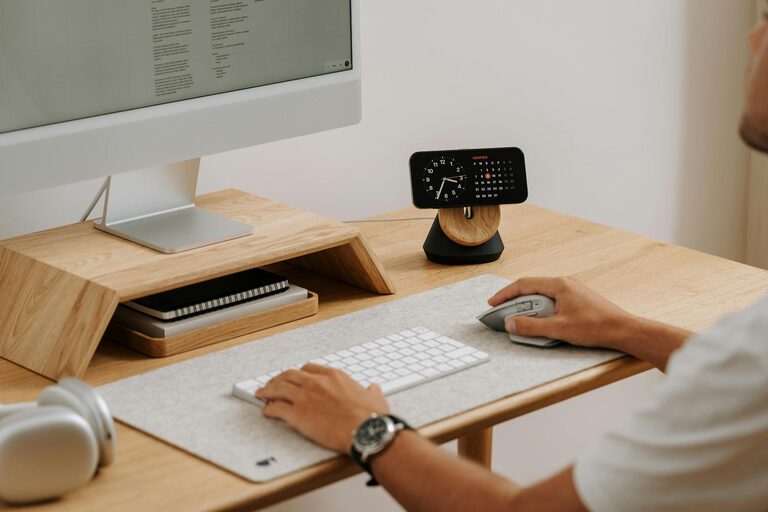
– Cable management: Keep cords neat and untangled using clips or sleeves to avoid distractions and hazards.
An organised workspace helps your mind feel clear and ready to work.
Optimise Lighting
Good lighting is often overlooked but essential for comfort and productivity.
– Use natural light: Position your desk to make the most of daylight.
– Add task lighting: Desk lamps with adjustable brightness and colour temperature help reduce eye strain.
– Avoid glare: Arrange screens and lights to prevent glare or reflections that cause discomfort.
Proper lighting can improve your energy levels and reduce headaches.
Create Boundaries Between Work and Home Life
Maintaining a separation between your professional and personal life can help maintain focus during work hours and relax after.
– Set specific work hours: Stick to a schedule that defines when you work and when you finish.
– Dedicated workspace: Use your home office only for work to create a mental division.
– End-of-day routine: Develop a ritual to signal the end of the workday, such as shutting down your computer or tidying your desk.
Clear boundaries prevent burnout and help sustain motivation.
Manage Noise and Distractions
Minimise disruptions to improve your concentration.
– Noise-cancelling headphones: Useful if background noise is an issue.
– White noise machines or apps: These can mask distracting sounds.
– Inform household members: Communicate your work hours and need for quiet during those times.
Reducing distractions allows you to maintain a steady workflow.
Personalise Your Space
Adding a personal touch can make your home office more inviting and boost morale.
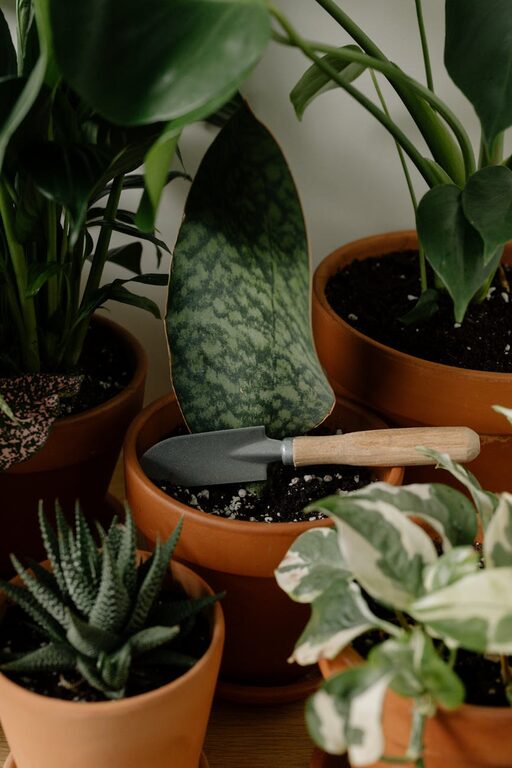
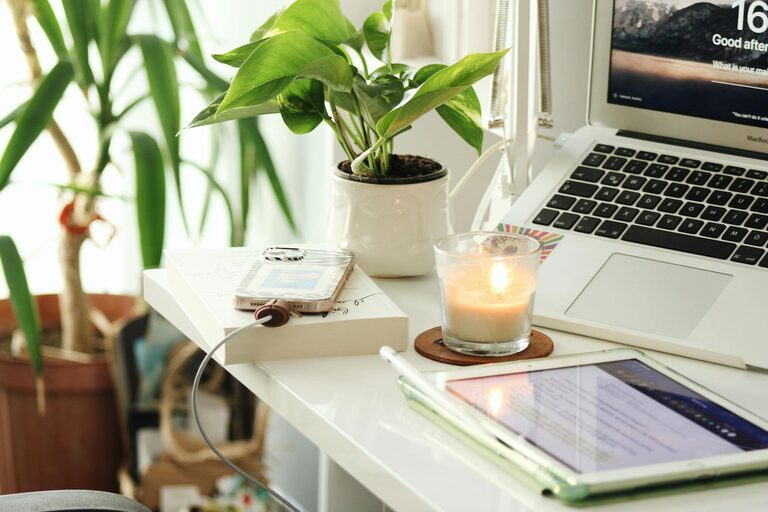
– Add plants: They improve air quality and add a calming presence.
– Artwork or photos: Choose visuals that inspire or comfort you.
– Favourite stationery: Use colours or styles that you enjoy.
A welcoming workspace encourages you to spend time there productively.
Use Technology Wisely
Equip your home office with the right tools to enhance efficiency.
– Reliable internet connection: Essential for meetings, research, and communication.
– Quality equipment: Invest in a good monitor, keyboard, and mouse for comfort.
– Organisational apps: Use calendars, to-do lists, and project management software to keep track of tasks and deadlines.
Technology that supports your needs can simplify work and reduce frustration.
Take Regular Breaks
Finally, remember that productivity isn’t about working non-stop.
– Use the Pomodoro technique: Work in focused intervals with short breaks.
– Move around: Stretch or take a short walk to refresh your body and mind.
– Hydrate and snack healthily: Maintain energy levels throughout the day.
Breaks prevent burnout and keep your productivity consistent.
—
Creating a productive home office is a balance of comfort, functionality, and personal style. By following these tips, you can design a space that not only promotes efficiency but also enhances your overall work-from-home experience. Remember, your home office should support your workflow and well-being, so feel free to adapt these suggestions to what works best for you.
About the Author